Managing a vacation rental along the New Jersey shore is a rewarding investment, but it…
In the fast-paced world of logistics and industrial operations, efficiency is everything. For high-volume facilities—from local distribution hubs to massive Amazon-style fulfillment centers—the sheer volume of packaging material generated every hour is staggering. But for many logistics supervisors, floor managers, and waste managers, the back end of the operation often feels like a losing battle.
Mountains of cardboard (OCC), plastic film, and wooden pallets can quickly clog up floor space, create safety hazards, and balloon disposal costs. The traditional approach of “toss it in the open-top container” is no longer enough. To truly optimize an industrial site, the focus must shift toward a single, powerful strategy: Compaction.
At Mazza Recycling, we provide the high-capacity compacting solutions that most traditional recycling companies simply aren’t equipped to handle. By integrating compaction into your waste management plan, you aren’t just cleaning up your warehouse; you’re revolutionizing your sustainability profile.
The Challenge for Industrial Waste Managers
If you are managing a warehouse, you know that cardboard is your primary byproduct. Between incoming shipments and outgoing repacking, the volume of Corrugated Cardboard (OCC) can be overwhelming.
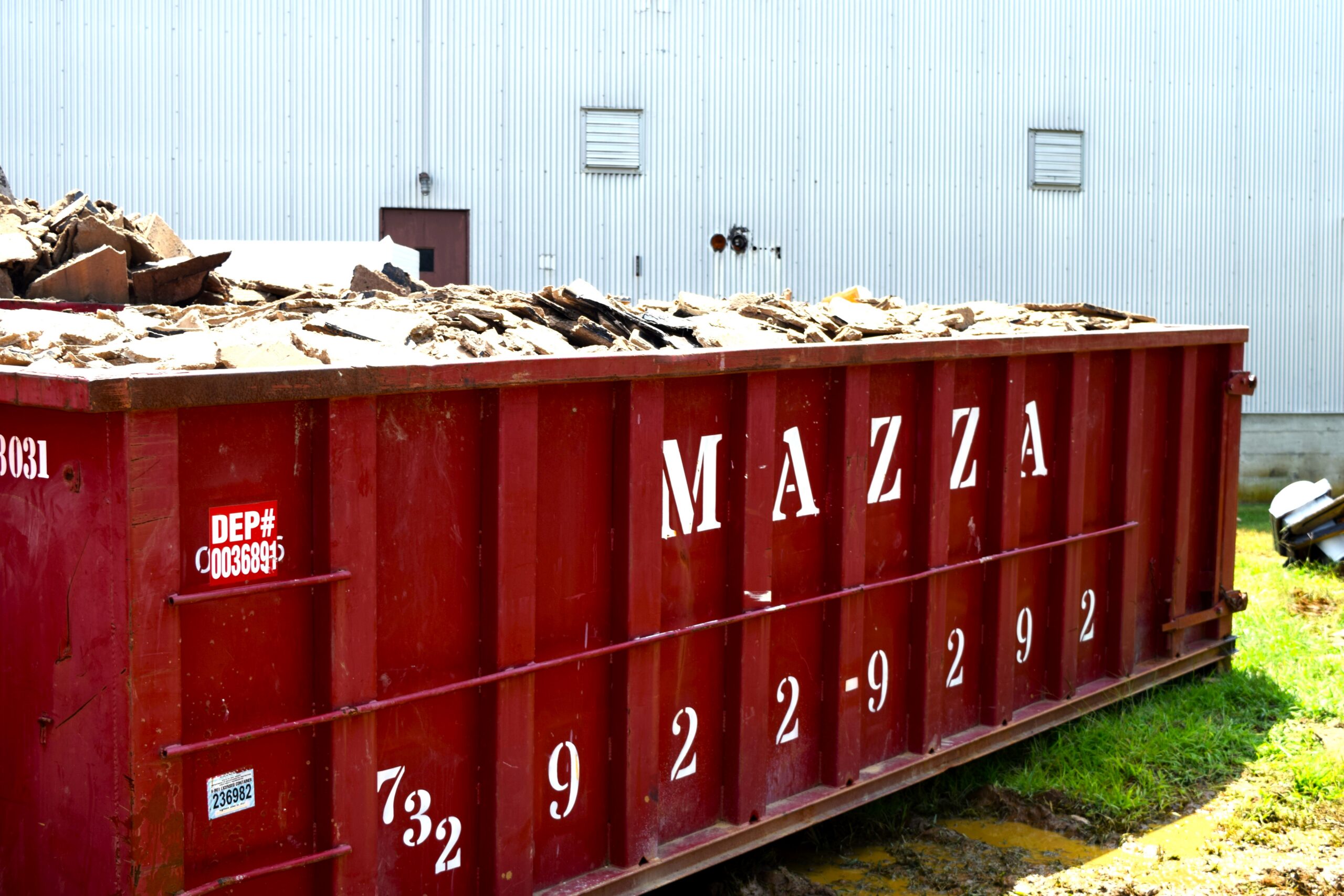
The “old way” of managing this is via open-top roll-off containers. However, loose cardboard is mostly air. When you pay for a haul of a loose container, you are essentially paying to transport air. This leads to:
- Frequent Hauls: More trucks entering and exiting your facility, increasing traffic and carbon emissions.
- Wasted Space: Massive containers taking up valuable dock space that could be used for staging or shipping.
- Safety Risks: Loose piles of cardboard are a fire hazard and can lead to slips, trips, and falls on the warehouse floor.
Why Compacting is the “Buzzword” for Success
In the industrial sector, “compacting” is the gold standard for sustainability. By using specialized industrial compactors, you can compress cardboard and plastic waste into dense, manageable units. This allows you to fit significantly more material into a single container—often up to four or five times the amount of a standard loose bin.
Most recycling companies lack the infrastructure to support these high-volume systems. They prefer “easy” curbside pick-ups or small commercial bins. Mazza Recycling is different. We have invested heavily in the equipment and transportation logistics required to service heavy-duty industrial compactors. We understand that for a floor manager, a broken or full compactor isn’t just an inconvenience—it’s a bottleneck that can stop production.
Tailored Solutions for Logistics Superiors
We know that as a logistics supervisor, your metrics are based on throughput and cost-per-unit. Waste management is often viewed as a “cost center,” but through proper compaction and recycling, we can turn it into a streamlined part of your supply chain.
By implementing a Mazza compacting solution, you benefit from:
- Reduced Pick-up Frequency: Fewer hauls mean lower transportation costs and less downtime at the loading dock.
- Revenue Opportunities: High-quality, compacted cardboard is a valuable commodity. When you provide clean, dense bales or compacted loads, you are contributing to a more efficient global paper market.
- Enhanced Safety and Aesthetics: A compacting system keeps your facility “audit-ready.” It contains waste internally, keeping your outdoor areas clean and free of windblown debris.
Handling the “Amazon-Scale” Volume
The “Amazon effect” has changed the way we look at packaging. Today’s warehouses are processing more individual units than ever before, which means more secondary and tertiary packaging waste.
Our facility in Tinton Falls is specifically designed to handle this high-volume industrial stream. When your compacted loads arrive at our MRF, they are processed through our advanced sorting lines, ensuring that your industrial-grade cardboard is recycled into new shipping materials. This is the definition of a circular economy: the box you ship today becomes the box you ship next month.
Environmental Impact of Industrial Compaction
Beyond the operational benefits, compaction is a massive win for the environment. Every time we reduce the number of truck trips required to clear your warehouse, we are cutting down on diesel fuel consumption and CO2 emissions.
Furthermore, loose cardboard in open containers is prone to getting wet. Wet cardboard is much harder to recycle and often ends up being rejected by paper mills. A compactor keeps the material dry and enclosed, protecting the integrity of the fiber and ensuring it gets a “second life.” For waste managers tasked with hitting ESG (Environmental, Social, and Governance) goals, this is a quantifiable way to demonstrate progress.
Why Choose Mazza for Your Industrial Network?
Mazza Recycling isn’t just a hauler; we are a partner in your industrial efficiency. We work directly with logistics and floor managers to determine the right size and type of compactor for your specific volume. We look at your floor plan, your traffic flow, and your waste composition to build a system that works for you, not against you.
We want to incorporate every major warehouse and industrial player in New Jersey into our network. By centralizing the recycling of our region’s industrial waste, we create a more resilient and sustainable local economy.
Optimize Your Facility Today
If your warehouse is still relying on loose bins and frequent, inefficient hauls, it’s time to upgrade your strategy. Sustainability in the industrial sector is about more than just “not throwing things away”—it’s about the smart, high-tech management of resources.
Don’t let your packaging waste sit in a landfill. Compact it, recycle it, and reclaim your floor space.
To learn more about our industrial capabilities and specialized equipment, visit our page on commercial trash and recycling collection.
Together, we can make New Jersey’s industrial corridor the most efficient and sustainable in the country. Contact our commercial team today to see how compaction can transform your operation.
Related Posts