For HVAC specialists, plumbers, and general contractors, the job doesn't end when the final pipe…
The global industrial landscape is at a critical crossroads. For sustainability directors and energy managers in energy-intensive sectors—such as cement manufacturing, paper mills, and steel production—the pressure to decarbonize is no longer a distant regulatory threat; it is a current operational reality. As carbon taxes rise and “Zero Waste to Landfill” mandates become the standard for corporate responsibility, the search for viable, high-energy alternatives to fossil fuels has intensified.
At Mazza Recycling, we are providing a bridge to this carbon-neutral future. By diverting non-recyclable debris from the waste stream and processing it into engineered alternative fuels, we are helping industrial leaders lower their Scope 1 emissions while simultaneously solving one of the most persistent challenges in waste management.
Biofuel vs. Landfilling: The Superior Environmental Choice
To understand the value of engineered alternative fuel (EAF), one must first look at the environmental cost of the alternative: the landfill. For decades, the default destination for non-recyclable organic debris—such as processed wood residuals, paper, and certain textiles—was a landfill cell. While modern landfills are engineered for containment, they are inherently “biological reactors.”
When organic materials decompose in the anaerobic (oxygen-free) environment of a landfill, they produce methane—a greenhouse gas that is more than 25 times as potent as carbon dioxide at trapping heat in the atmosphere. Even with state-of-the-art methane capture systems, a significant percentage of these emissions escape.
By diverting this material into an engineered fuel stream at our Tinton Falls facility, we effectively “short-circuit” the methane cycle. Instead of allowing carbon to rot and off-gas into the atmosphere, we capture that energy and put it to work. This transition from a waste-disposal mindset to an energy-recovery mindset is the cornerstone of the circular economy. For an industrial energy manager, this means the fuel you burn isn’t just a commodity; it’s a verified diversion from a high-impact waste stream.
A Cleaner Burn: The Technical Advantages of Biogenic Carbon
For industries like cement kilns, the “heat” (BTU value) of a fuel is paramount. Historically, coal and petroleum coke (petcoke) have been the fuels of choice because of their energy density. However, they come with a massive carbon debt and high levels of sulfur and ash. Mazza’s engineered alternative fuels, derived primarily from wood-based residuals, offer a compelling technical alternative.
The Biogenic Carbon Benefit
Unlike the carbon in coal, which has been locked underground for millions of years, the carbon in wood-based fuels is “biogenic.” This means it is part of a natural, short-term carbon cycle. When wood fuel is burned, it releases the carbon that the tree absorbed during its growth. This “net-neutral” characteristic is a vital tool for industries looking to report lower net Scope 1 emissions under the Greenhouse Gas Protocol.
High BTU Value and Low Ash Content
Mazza’s processing ensures that our engineered fuel is consistent and high-performing.
- Energy Density: Our fuels are engineered to maintain a consistent BTU profile, providing the steady, high-intensity heat required for industrial kilns and boilers.
- Low Ash Content: Traditional coal leaves behind significant amounts of ash, which can contaminate industrial processes or require expensive disposal. Our wood-based alternatives burn significantly cleaner, with lower ash residuals and reduced sulfur emissions compared to traditional fossil fuels.
Technical Deep-Dive: Gasification vs. Direct Combustion
When considering the switch to EAF, energy managers must evaluate the combustion technology of their facility. Mazza’s engineered fuels are versatile enough to serve two primary pathways:
- Direct Co-Firing: In cement kilns, EAF is often injected directly into the main burner or the pre-calciner. Because our wood-based fuels have a low moisture profile, they ignite quickly, providing a stable flame temperature that mimics the performance of pulverized coal.
- Gasification: In modern industrial boilers, EAF can be processed through a gasifier to produce “syngas” (synthesis gas). This gas can then be burned to generate steam or electricity. The consistent particle size of Mazza’s engineered fuel is critical here; it prevents the “bridging” or clogging that often plagues lower-quality waste-derived fuels, ensuring a steady gasification rate and high thermal efficiency.
The Chemistry of Ash: Turning a Byproduct into a Raw Material
In the cement industry, ash isn’t just a byproduct; it can be an ingredient. When traditional coal is burned, the resulting ash must be carefully managed to ensure it doesn’t negatively affect the chemistry of the clinker (the precursor to cement).
Mazza’s wood-based EAF produces an ash that is rich in calcium, silica, and alumina—the very building blocks of cement. This allows the ash to be seamlessly integrated into the final product, effectively achieving a 100% utilization rate of the fuel. This “dual recovery”—both energy and mineral—is the gold standard for industrial sustainability.
Economic & Regulatory ROI: Insulating Your Operations
Sustainability is often framed as a cost, but for users of engineered alternative fuels, it is a strategic hedge against market and regulatory volatility.
Meeting “Zero Waste” Mandates
Many global corporations have set aggressive “Zero Waste to Landfill” goals for their supply chains. If you are a manufacturer providing materials for these companies, your energy source is under the microscope. Adopting Mazza’s alternative fuels allows you to demonstrate a closed-loop system, where waste residuals are utilized to power the very processes that create new products.
Decoupling from Global Fossil Fuel Markets
The prices of coal and natural gas are subject to extreme volatility driven by geopolitical events and global supply chain disruptions. By sourcing an engineered fuel from a regional hub like Tinton Falls, industrial managers can insulate their operations from these global shocks. Our fuels are a “locally grown” energy source, providing more predictable pricing and a more resilient supply chain.
Global Policy and Future-Proofing
While the US regulatory landscape is evolving, we can look to the European Union’s “Waste-to-Energy” standards as a roadmap. Facilities that proactively switch to alternative fuels today are not just saving money; they are future-proofing their operations against carbon pricing mechanisms that are likely to expand in the coming decade.
Logistics, Storage, and the “Back-Haul” Benefit
The success of an engineered fuel strategy depends on one thing: a consistent, high-volume supply. Industrial kilns cannot be shut down because a fuel shipment is late or inconsistent in quality.
For environmental contractors and energy managers operating in the New Jersey and New York metro areas, logistics are the single largest variable in project cost. Mazza Recycling has uniquely positioned its Tinton Falls facility to help partners solve the “empty mile” problem through strategic back-hauling.
Typically, a truck might deliver C&D waste or municipal debris to a processing center and then leave empty. By utilizing Mazza’s on-site inventory of engineered fuels, a fleet can drop off a load of waste and immediately load up with high-performance EAF for the return trip to the industrial facility. This dual-purpose trip effectively cuts transportation costs in half, maximizes fuel efficiency, and keeps your Scope 3 transportation emissions to an absolute minimum.
To maintain the energy density of these fuels during on-site storage, we recommend a “First-In, First-Out” (FIFO) inventory system within covered silos. This protects the wood fiber from moisture absorption, ensuring that when the fuel reaches your burner, it delivers the maximum BTU possible.
Scaling for the Future: The Mazza Infrastructure Advantage
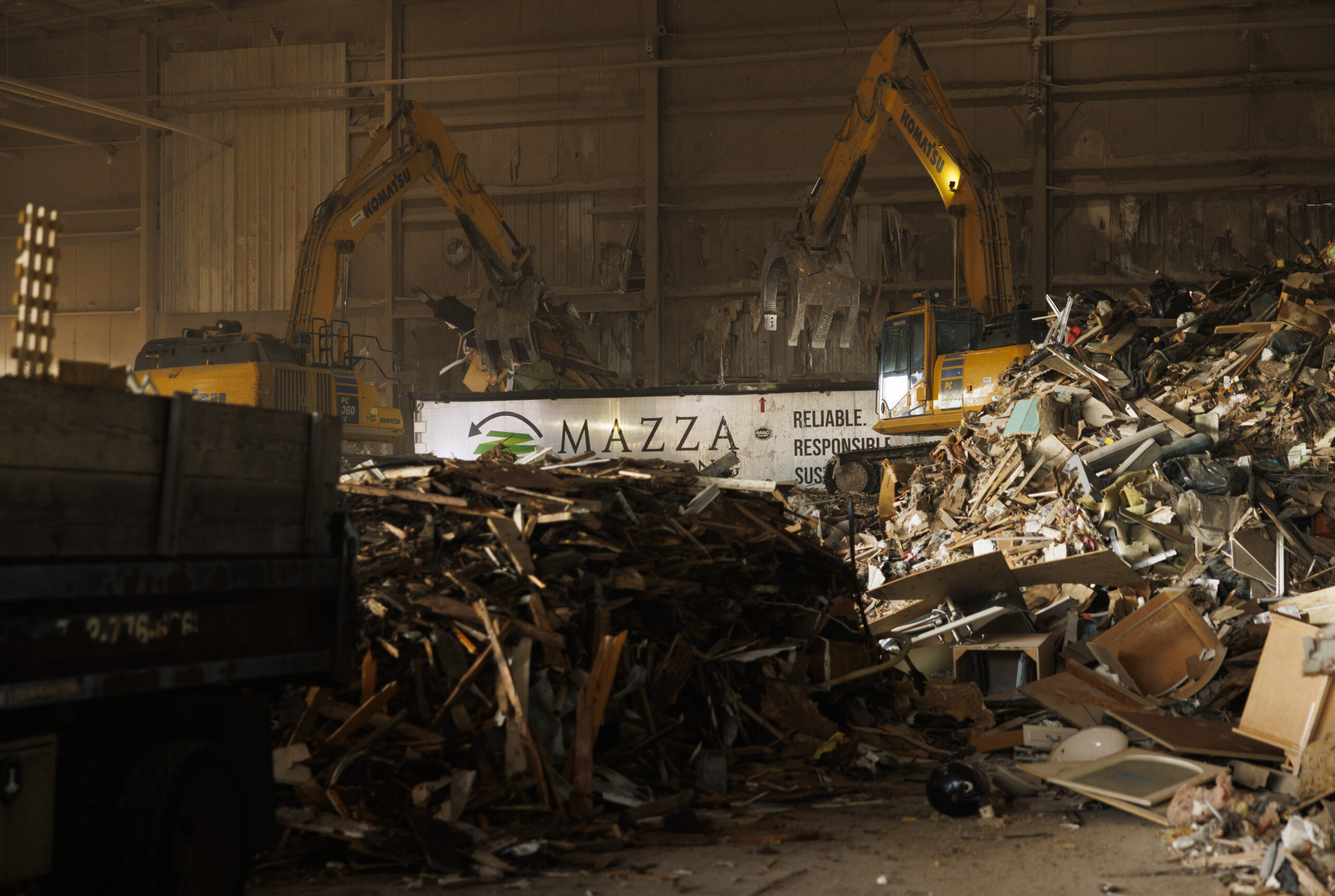
Mazza Recycling has invested millions in the infrastructure required to guarantee fuel consistency. At our Tinton Falls facility, we use advanced sorting, shredding, and screening technology to ensure that every ton of fuel we produce meets the specific moisture, size, and energy specifications of our industrial partners. We aren’t just a “recycler”; we are a specialized fuel manufacturer.
Our facility serves as a regional buffer, holding significant stockpiles that insulate our partners from seasonal fluctuations in waste generation. When you partner with Mazza, you aren’t just buying a load of fuel; you are securing a dedicated energy supply chain.
Conclusion: A Leadership Opportunity for Industry
The transition to engineered alternative fuels is more than just a technical upgrade; it is a statement of leadership. It shows that your organization is ready to move beyond the limitations of the “take-make-dispose” economy and embrace a future where energy is recovered, waste is eliminated, and emissions are minimized.
As global energy markets remain volatile and environmental regulations tighten, the “Full Circle” approach offered by Mazza Recycling provides the stability and performance required for the next generation of industrial growth. By looking beyond the landfill, we can power our infrastructure with the recovered energy of today to build a cleaner tomorrow.
Related Posts