New Jersey stands as the logistical beating heart of the North American supply chain. Situated…
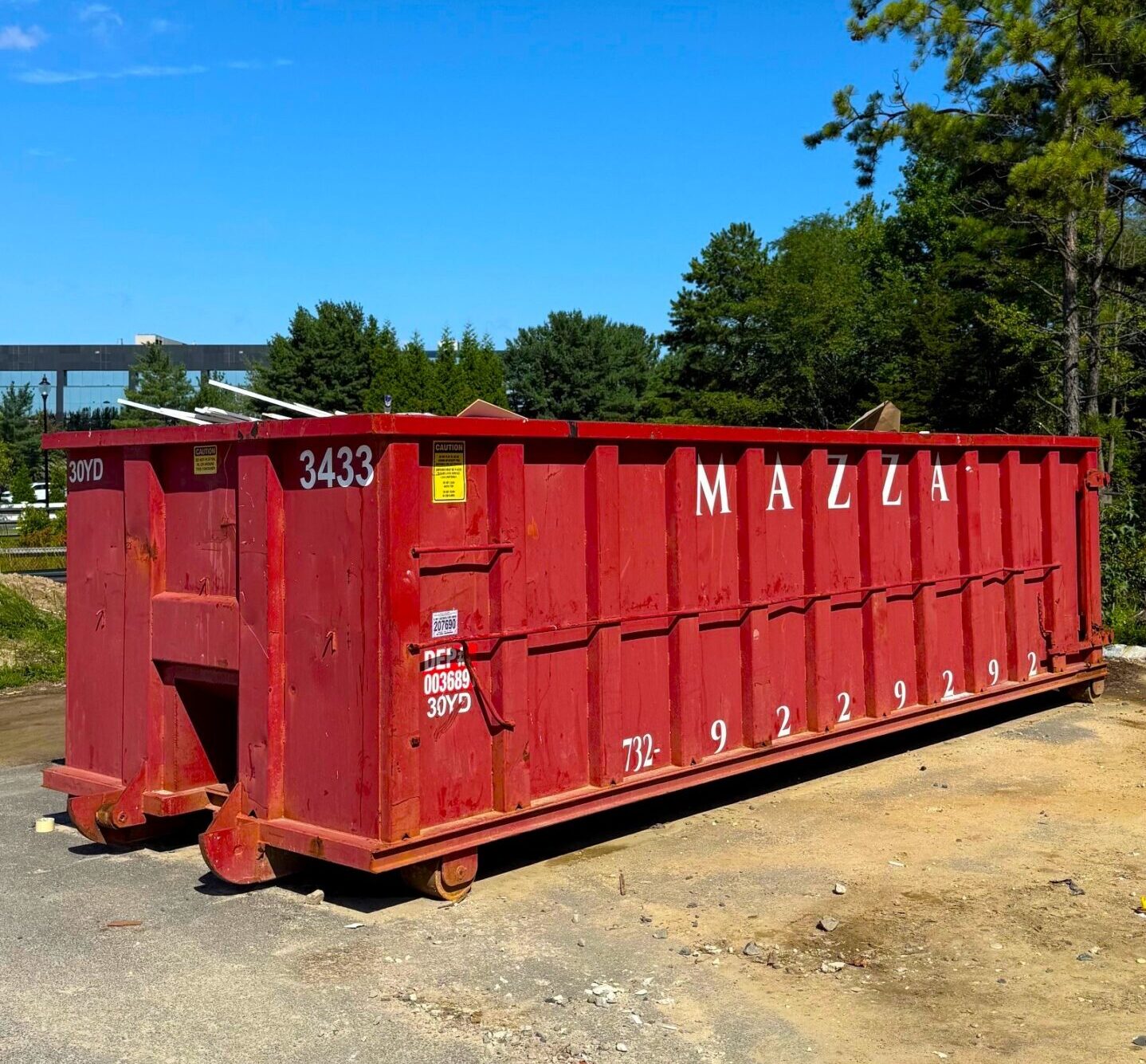
Ever wonder what actually happens to the piles of concrete, old drywall, scrap metal, and mixed household debris after a roll-off dumpster is hauled away from your job site or driveway?
For many property owners and general contractors, the dumpster pickup feels like the final step in a cleanup project. The heavy container rolls down the street, the site is clean, and the waste is effectively “gone.” But behind the scenes, that pickup is just the beginning of a complex, highly regulated resource recovery journey.
In an era where landfill capacity is shrinking and environmental sustainability is a top priority, throwing mixed debris into a pit is no longer an acceptable solution. Instead, state-of-the-art waste management leaders use advanced recycling technology and meticulous hand-sorting to extract valuable raw materials from mixed loads.
Take a look inside the journey your waste takes after it leaves your property, detailing the sorting, recovering, and upcycling stages that keep thousands of tons of material out of New Jersey landfills every day.
Step 1: Transport & Arrival at the Transfer Station
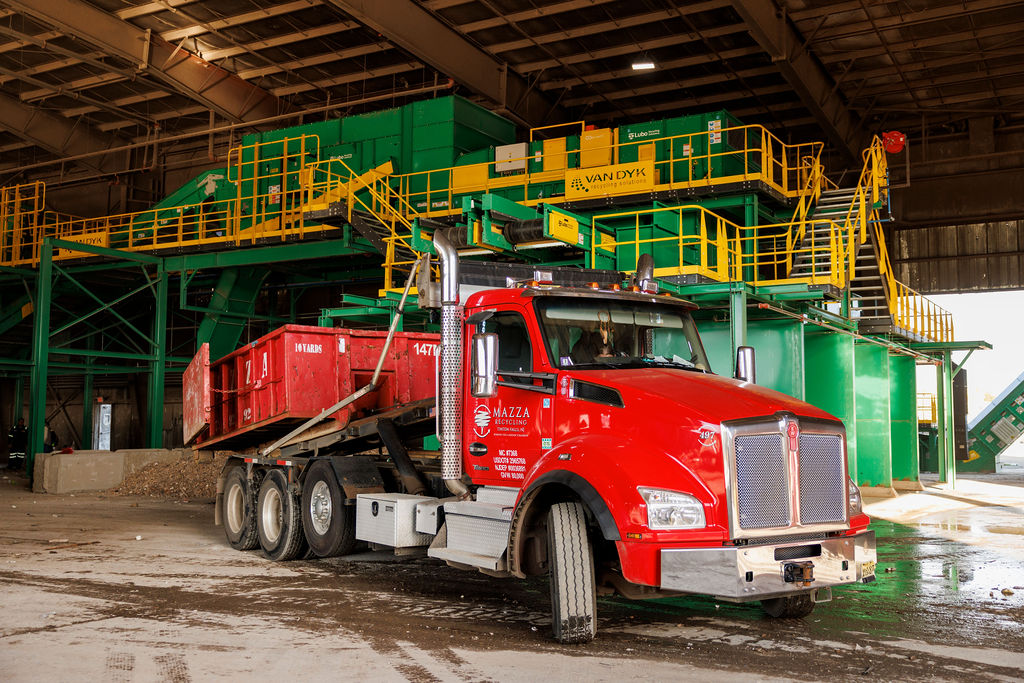
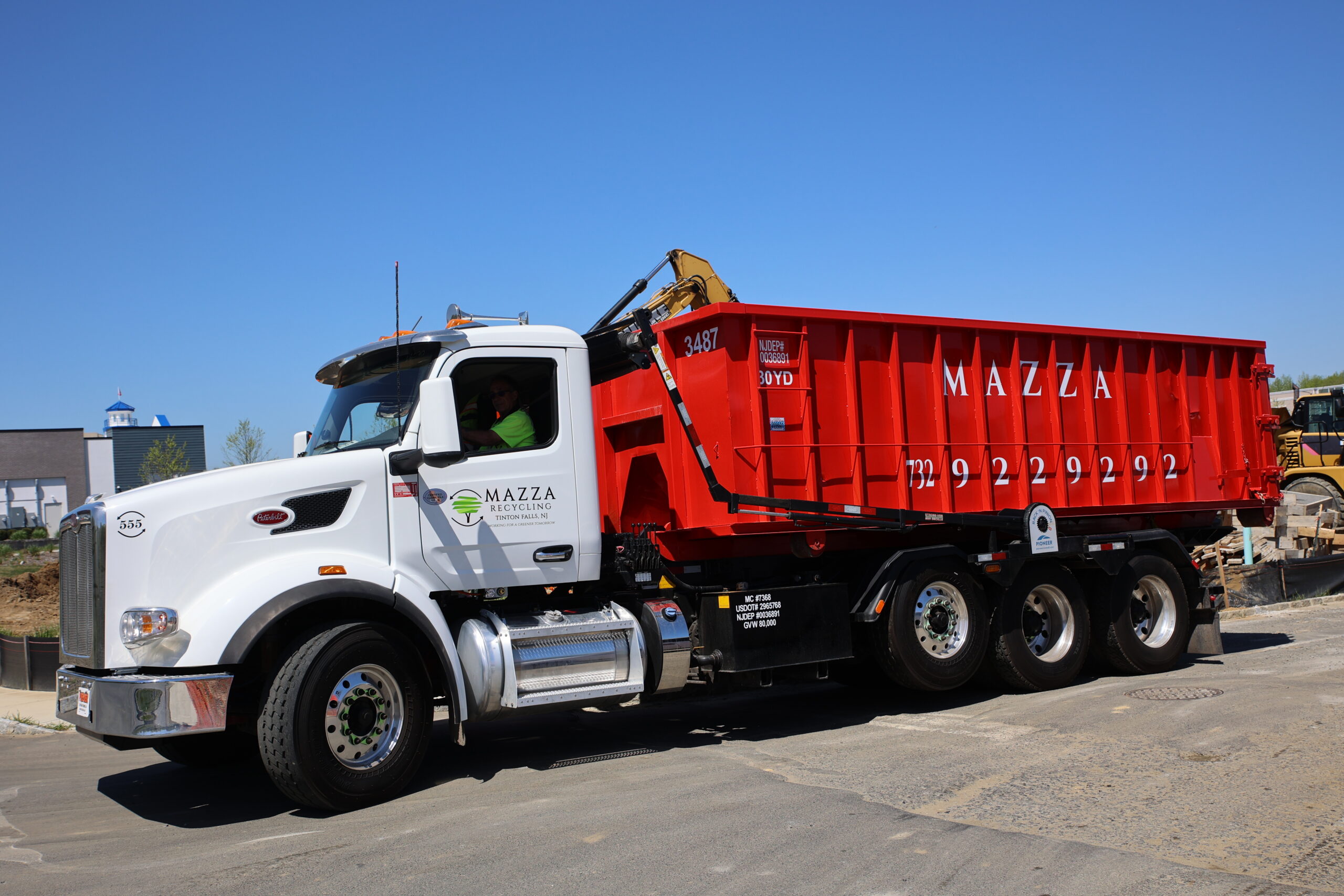
The journey begins immediately after the roll-off truck secures your container. Rather than heading straight to a distant regional landfill, the truck routes directly to a specialized Material Recovery Facility (MRF) and transfer station.
Upon arrival at the facility, every truck stops at state-certified vehicle scales. Here, the gross weight of the truck and its cargo is registered to establish precise baseline metrics for regulatory reporting and environmental auditing. Once weighed, the truck is cleared to enter the main tipping floor.
The tipping floor of a modern recovery center is a bustling, highly controlled hub of industrial activity. Dumpsters unload their mixed contents onto dedicated processing zones. Immediately upon tipping, trained heavy equipment operators perform an initial visual assessment to screen for non-conforming items, hazardous substances, or oversized bulk objects that require special handling before entering the automated processing lines.
Step 2: Initial Heavy Mechanical & Manual Pre-Sorting
Once the debris is tipped onto the floor, the primary separation process kicks off. Construction and demolition (C&D) waste, as well as bulky residential cleanout loads, contain an unpredictable mix of heavy, bulky, and fine materials.
To prepare the debris stream for refined sorting, heavy machinery—such as excavators fitted with specialized grapple attachments—moves into action:
- Bulk Object Removal: Large structural steel beams, entire wooden pallets, oversized furniture, and large slabs of concrete are separated from the main pile to prevent machinery jams further down the line.
- Bag Breaking & Metering: Automated claw systems and mechanical metering feeders break open trash bags and spread the material into a uniform, single-layer stream on high-speed conveyor belts.
- Manual Quality Control: Experienced sorters stationed along the initial intake line manually extract items that could damage mechanical equipment or contaminate recyclable streams, ensuring a smooth transition into automated processing phases.
       [ Dumpster Pickup ]
                │
                ▼
      [ Certified Scale Weigh-In ]
                │
                ▼
      [ Tipping Floor Assessment ]
                │
                ▼
  [ Heavy Grapple & Pre-Sorting Line ]
    │           │            │
    ▼           ▼            ▼
[ Concrete ] [ Scrap Metal ] [ Wood & Yard Waste ]
Step 3: High-Tech Automated Separation Technologies
After bulk separation, the remaining material moves through a multi-stage mechanical screening process designed to categorize items by size, density, magnetic properties, and material composition.
Modern recovery centers use a blend of physics and high-speed automation to maximize recovery rates:
Finger Screens and Trommels
Massive rotating cylindrical screens (trommels) and vibrating finger screens sort items based on particle size. Fine debris like dirt, small masonry chips, and gravel fall through bottom grates, while larger items continue down the primary belt.
Air Classifiers & Density Separators
Heavy materials behave differently in air streams than lightweight ones. Powerful industrial blowers and vacuum systems push air through the moving waste stream. Lightweight materials like paper, cardboard, and light plastics fly upward into collection hoods, while heavy items like brick, tile, and hardwood drop straight down onto secondary processing lines.
Eddy Current Separators & Magnetic Belts
Metals are among the easiest and most valuable materials to recover. Overhead cross-belt magnets continuously pull magnetic ferrous metals (iron and steel) directly out of the moving debris stream. Further down the line, Eddy Current Separators generate powerful pulsating magnetic fields that induce electrical currents in non-ferrous metals. This process physically repels non-magnetic metals—like aluminum copper, and brass—ejecting them off the belt into dedicated sorting bins.
Step 4: Upcycling Waste into Valuable Resources
True sustainability doesn’t end when materials are separated—the real magic happens when waste is converted into high-grade, reusable products. Rather than sending raw recovered debris off to third-party processors, advanced recycling plants turn reclaimed debris into functional commercial and residential materials right on site:
| Recycled Material Category | Processing Technique | End-Use / Upcycled Product |
| Clean Wood & Stumps | Industrial grinding, screening, and natural dyeing | Premium landscaping mulch, wood chips, and soil conditioners |
| Concrete, Brick & Masonry | Heavy crushing, magnetic metal extraction, and aggregate grading | Dense Graded Aggregate (DGA), stone dust, clean blue stone, and sub-base material |
| Ferrous & Non-Ferrous Metals | Baling, sorting by grade, and direct foundry smelting | Raw steel, copper wiring, and aluminum manufacturing stock |
| Uncontaminated Soil & Dirt | Multi-stage trommel screening and particle sizing | High-grade topsoil and structural fill dirt for construction projects |
By re-engineering waste streams into commercial products like Dense Graded Aggregate, clean stone, and decorative mulch, millions of pounds of raw natural resources are conserved every year.
Comprehensive Service Area Coverage
Having access to modern recycling facilities requires an efficient, responsive logistics network. A comprehensive fleet of roll-off trucks and collection vehicles ensures that residential homeowners, commercial builders, and industrial operators can seamlessly access sustainable disposal options.
Services cover key regions across New Jersey and surrounding territories, with dedicated regional coverage spanning:
- Monmouth County, NJ: Full coverage across all coastal and inland municipalities, including Tinton Falls, Monmouth Beach, Asbury Park, Long Branch, Freehold, Middletown, Wall Township, and surrounding communities.
- Ocean County, NJ: Comprehensive dumpster rental, commercial trash, and C&D debris processing reaching Toms River, Brick, Jackson, Lakewood, Point Pleasant, Stafford Township, and neighboring towns.
- Greater New Jersey Open-Market Counties: Authorized transfer station services accepting construction and bulky waste generated across Bergen, Burlington, Camden, Cumberland, Hunterdon, Middlesex, Passaic, Salem, Somerset, and Warren counties.
- Bucks County, PA & Regional SE Pennsylvania: Daily container drop-offs, commercial waste solutions, and haulage support for jobsites across the state line.
Why Landfill Diversion Matters for Your Business and Community
Choosing an environmentally conscious waste partner does more than just keep your job site clean—it directly impacts regional sustainability goals and your bottom line.
Supporting LEED Certification
For commercial contractors and architects, diverting construction waste away from landfills is a prerequisite for achieving LEED (Leadership in Energy and Environmental Design) certification points. Precise weight slips and diversion reporting provide verified data proving that project waste was recycled rather than dumped.
Preserving Regional Landfill Space
Landfills across the Mid-Atlantic region face dwindling capacity and rising disposal costs. Every ton of concrete, scrap wood, and metal diverted through mechanical sorting prolongs the lifespan of municipal infrastructure and helps keep waste management costs predictable.
Lowering Carbon Footprints
Upcycling local debris cuts down on the need to mine virgin stone, cut down timber, or smelt new ore. Reprocessing local materials on-site slashes transportation emissions and keeps energy usage to a minimum.
Choosing the Right Disposal Partner for Your Next Project
Whether you are remodeling a suburban kitchen, clearing out an inherited estate, or managing a multi-story commercial demolition, the way you handle your waste reflects your commitment to the community.
When renting a dumpster, look for a provider that operates approved Class B recycling facilities and state-of-the-art transfer stations capable of processing over 1,000 tons of debris per day. Working with an integrated waste disposal team guarantees that your discarded materials are sorted with precision and transformed into usable raw goods.
To secure reliable roll-off container rentals or learn more about sustainable disposal solutions in your area, contact Mazza Recycling to discover how your project debris can be responsibly managed, diverted, and upcycled.
Ready to book your dumpster rental? Follow the link here:
Related Posts