When you tackle a major home improvement project, a deep spring cleaning, or a commercial…
Managing waste efficiently is a fundamental cornerstone of operating a successful commercial facility. Whether you manage a bustling retail storefront, a busy restaurant, an industrial manufacturing plant, or a sprawling multi-family residential complex, your choice of waste management infrastructure impacts both your bottom line and your daily operations. Choosing a container that is too small leads to messy overflows, health code violations, and unexpected overage fees. Conversely, opting for a container that is far too large means your business is consistently paying to haul empty space.
Finding the sweet spot requires a detailed understanding of the types of commercial containers available, their precise dimensions, and how your specific industry dictates your weekly waste volume. This comprehensive guide walks you through everything you need to know to accurately size your commercial waste solution.
1. Front-Load vs. Roll-Off: What Does Your Site Need?
Before diving directly into yardage numbers, it is crucial to determine which category of commercial waste service matches your facility’s routine. Commercial waste management generally splits into two distinct types of containers: front-load containers and roll-off containers.
Front-Load Containers (Permanent, Daily Solutions)
Front-load containers are the compact, permanent fixtures you typically see situated behind office buildings, restaurants, and retail spaces. They feature sloped tops and slots on the sides designed for a front-loading commercial garbage truck’s forks to insert, lift, and empty the container over the cab.
- Best Used For: Standard daily operations, lightweight office trash, food packaging, small retail waste, and routine recycling streams.
- Pickup Frequency: Scheduled on a recurring weekly or bi-weekly cadence.
Roll-Off Containers (Temporary, Heavy-Duty Solutions)
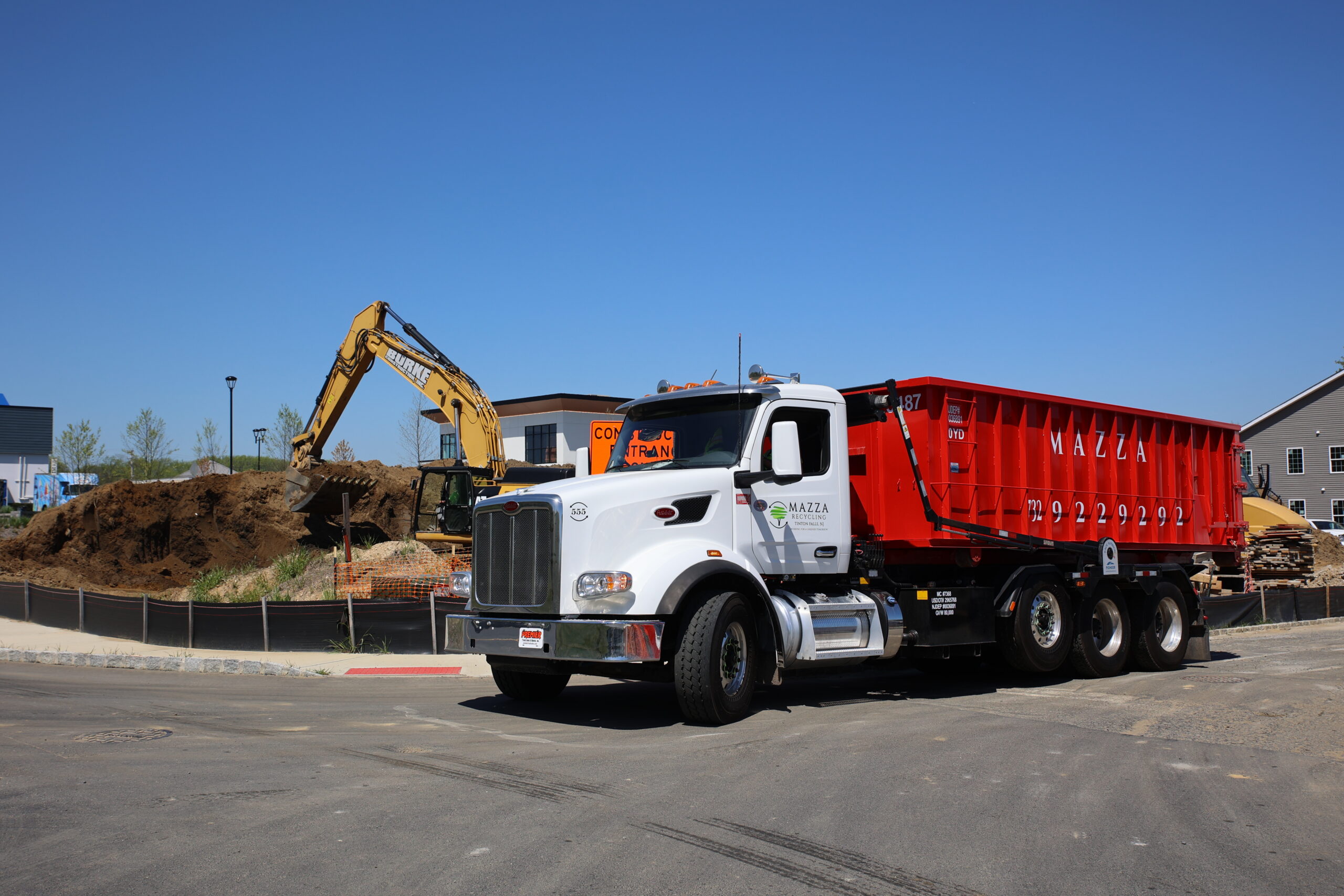
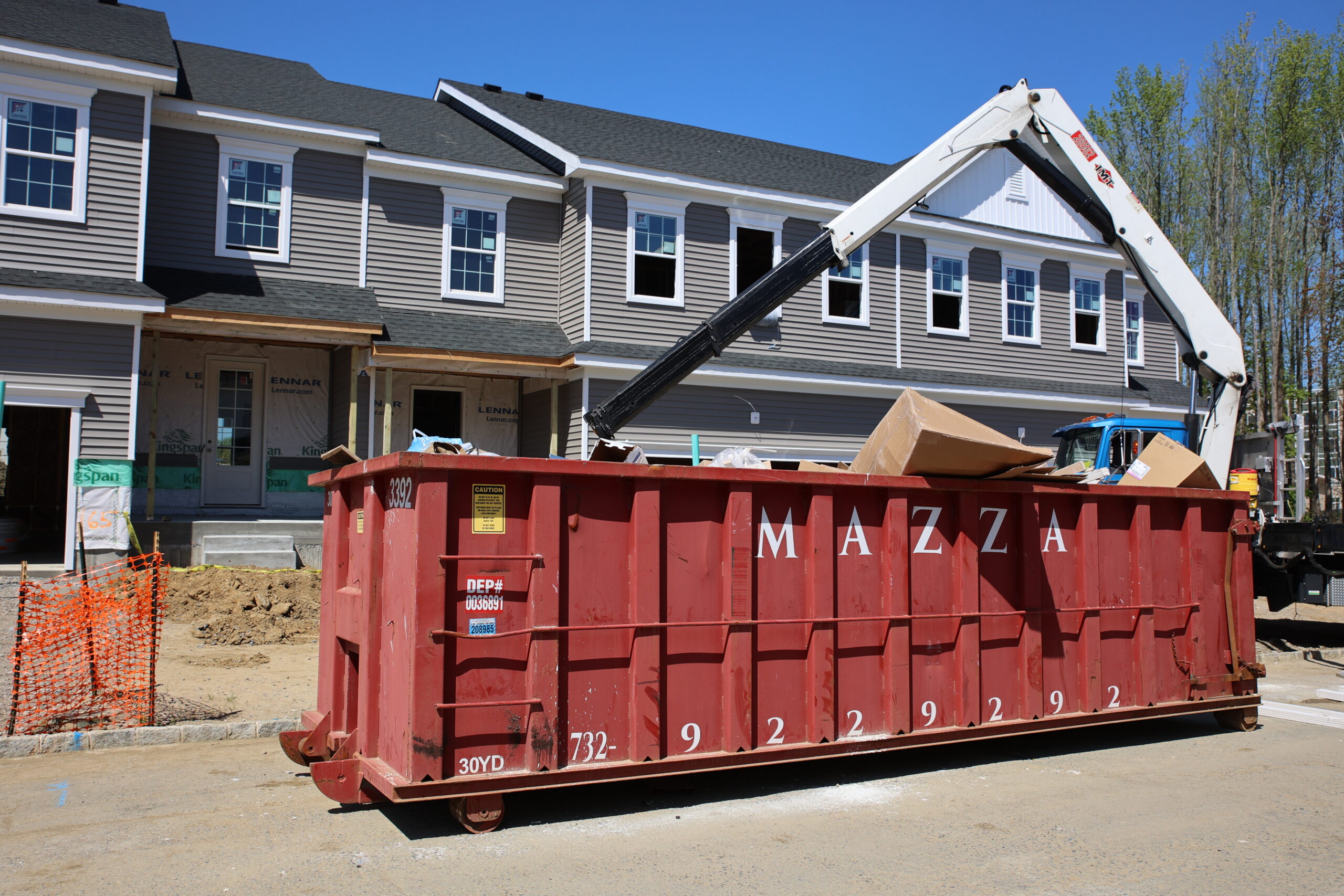
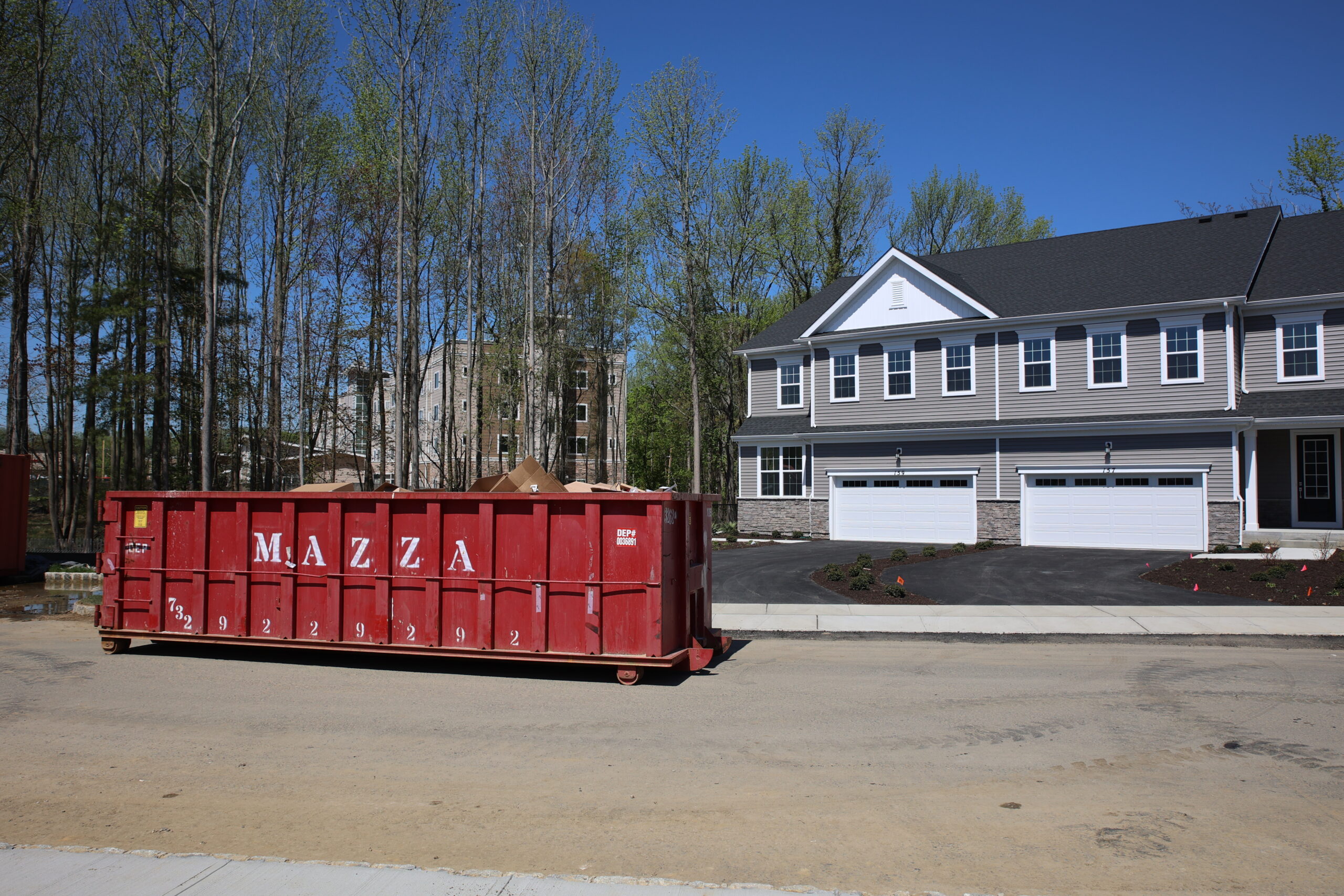
Roll-off containers are large, open-topped rectangular bins engineered for major projects, high-volume industrial output, or substantial construction debris. They are delivered and hauled away by specialized roll-off trucks that use a hydraulic arm and a cable hoist system to slide the bin off the truck’s bed.
- Best Used For: Commercial remodeling, roofing tear-offs, demolition work, warehouse cleanouts, and heavy materials like concrete, steel, brick, and dense timber.
- Pickup Frequency: Typically on-demand (called in when filled) or scheduled around a finite project timeline.
2. Breaking Down Permanent Front-Load Dumpster Sizes
Permanent front-load bins are measured in cubic yards, which refers to the total volume of waste the bin can physically hold. To visualize a cubic yard, imagine a box that is 3 feet long, 3 feet wide, and 3 feet tall.
Here is a breakdown of the standard front-load commercial sizes and their ideal real-world applications:
2-Yard Commercial Dumpsters
- Approximate Dimensions: 3 feet long x 6 feet wide x 3 feet tall
- Equivalent Capacity: Roughly 12 to 15 standard, 30-gallon heavy-duty trash bags.
- Ideal Match: Small boutique storefronts, quiet professional settings (like legal or accounting firms) with fewer than 25 employees, or micro-cafés that do not handle major grocery or raw food waste streams.
4-Yard Commercial Dumpsters
- Approximate Dimensions: 4 feet long x 6 feet wide x 4.5 feet tall
- Equivalent Capacity: Roughly 24 to 30 standard trash bags.
- Ideal Match: Mid-sized offices (up to 50 or 60 employees), small medical clinics, medium-sized retail shops, and small religious or community centers. It offers a solid footprint balance, providing extra room for unexpected packaging waste without dominating a parking lot layout.
6-Yard Commercial Dumpsters
- Approximate Dimensions: 5 feet long x 6 feet wide x 5 feet tall
- Equivalent Capacity: Roughly 36 to 45 standard trash bags.
- Ideal Match: Highly active commercial properties, including medium-sized restaurants, public schools, multi-tenant office complexes, and light industrial warehouses. Six-yard bins are often chosen because they are tall enough to hold bulky items like broken wooden pallets or large cardboard shipping boxes without jamming the lid.
8-Yard Commercial Dumpsters
- Approximate Dimensions: 6 feet long x 6 feet wide x 6 feet tall
- Equivalent Capacity: Roughly 48 to 60 standard trash bags.
- Ideal Match: Large-scale commercial applications, such as supermarkets, high-capacity hotels, major distribution centers, and apartment complexes with dozens of units. This represents the upper limit for traditional front-load vehicle collections before transitioning to a heavy industrial compaction setup.
3. Breaking Down Temporary or Project Roll-Off Dumpster Sizes
If your commercial facility is undergoing an expansion, clearing out a legacy storage warehouse, or handling dense construction and demolition debris, standard front-load containers will not suffice. You will need a heavy-duty roll-off dumpster to handle the weight and volume safely.
| Dumpster Size | Standard Footprint Dimensions | Average Weight Capacity Limit | Common Industry Applications |
| 10-Yard | 11–12 ft Long x 8 ft Wide x 4 ft Tall | 2 Tons (4,000 lbs) | Asphalt shingle roof tear-offs, small commercial landscaping overhauls, masonry cleanups. |
| 20-Yard | 22 ft Long x 8 ft Wide x 4.5 ft Tall | 3 Tons (6,000 lbs) | Retail storefront interior buildouts, floor renovations, office furniture updates. |
| 30-Yard | 22 ft Long x 8 ft Wide x 6 ft Tall | 4 Tons (8,000 lbs) | Major building additions, structural demolitions, comprehensive industrial warehouse clear-outs. |
| 40-Yard | 22 ft Long x 8 ft Wide x 8 ft Tall | 5–6 Tons (10,000+ lbs) | Massive commercial construction sites, window replacements for entire complexes, scrap metal collection. |
4. The Critical Sizing Formula: Calculating Your True Volume
Choosing a dumpster blindly often leads to operational disruption. To pinpoint exactly what size your property requires, execute a structured waste audit across a standard business week using this three-step methodology:
Step 1: Count and Track the Bags
For seven consecutive operational days, have your custodial or maintenance team keep a running tally of how many standard garbage bags are removed from your interior spaces daily. Note whether they are 30-gallon bags or 55-gallon industrial liners, and pay close attention to how full they actually are when tied off.
Step 2: Estimate Your Bulky and Unbagged Debris
Bags only tell half the story. If your business regularly breaks down dozens of corrugated shipping boxes, discards thick wooden crates, or creates loose waste (like coffee grounds or raw food waste from a kitchen commercial line), estimate that volume separately. As a general rule of thumb, every uncrushed, standard appliance-sized box takes up roughly half a cubic yard of loose volume inside an uncompacted bin.
Step 3: Run the Math and factor in Frequency
Let’s look at a practical example: Say your facility generates roughly 30 large trash bags a week, plus an assortment of loose cardboard boxes that equates to another 2 cubic yards of volume.
Thirty 30-gallon bags fill up roughly 4 to 5 cubic yards of space. Adding your loose cardboard brings your true weekly volume to roughly 7 cubic yards of raw material.
From here, you have two logical choices to make regarding your management plan:
- Opt for an 8-Yard Dumpster picked up exactly once per week. This gives you a safe operational buffer for high-volume seasons without risking an ugly overflow.
- Opt for a 4-Yard Dumpster picked up twice per week. This structure moves 8 total yards of capacity through your property across the week, which accommodates your 7 yards of material easily while keeping the physical footprint of the bin smaller in your alleyway or parking enclosure.
5. Overlooked On-Site Logistics and Spatial Constraints
Finding the right structural volume on paper is step one, but you must also ensure the physical container fits within the spatial constraints of your commercial property. Consider these critical on-site physical factors before signing a delivery contract:
- Vertical Overhead Clearances: A commercial front-load truck requires at least 14 feet of vertical clearance to drive safely under wires, but it requires up to 25 feet of wide, unobstructed overhead clearance to lift a 6-yard or 8-yard container completely into the air and tip it upside down into the collection hopper. Ensure your enclosure does not sit directly under low-hanging tree branches or live utility lines.
- The Turning Radius of the Vehicle: Large, multi-axle commercial collection trucks cannot make tight, right-angle turns. They need wide paths to line up flush with the container. If your dumpster enclosure is tucked tightly deep inside a winding, narrow alleyway, a front-load or roll-off truck may struggle to access it safely without clipping brick corners or scraping curbs.
- Surface Integrity and Ground Weight: A fully loaded 30-yard or 40-yard roll-off dumpster filled with concrete or heavy roofing shingles can weigh upwards of 10,000 to 12,000 pounds. If dropped directly onto thin asphalt during the peak heat of summer, the small metal rollers can puncture or sink directly into the pavement. Always ensure your designated drop zone sits on thick, reinforced concrete, or place heavy plywood sheets down to distribute the weight evenly.
6. Separating Your Waste Streams: The Power of Recycling
You can significantly lower your overhead waste disposal costs by actively diverting recyclable materials out of your primary trash bin. If your facility generates a high volume of paper, office documents, clean cardboard, glass bottles, aluminum cans, or plastic packaging, look into a dedicated single-stream recycling solution alongside your standard trash container.
By pulling clean cardboard and packaging out into its own separate, dedicated recycling bin, you instantly shrink the required size of your primary trash dumpster. Because recycling collection rates are often structured differently than raw solid waste disposal fees, optimizing this balance can trim hundreds of dollars off your monthly facility utility costs over the long run.
7. Partnering with a Reliable Local Jersey Waste Expert
Every commercial site possesses a unique operational rhythm, meaning there is no one-size-fits-all approach to commercial sanitation. Partnering with an experienced, transparent local provider ensures you navigate local municipal codes, environmental regulations, and weight allowances cleanly without overpaying for space you do not use.
When you work with a trusted regional leader, you gain access to a broad fleet of modern containers, flexible pickup structures, and reliable customer service reps who understand the regional landscape intimately. If you are ready to streamline your facility’s daily operations, protect your workspace cleanliness, and build an eco-friendly disposal plan tailored specifically to your footprint, secure a reliable dumpster rental in NJ to optimize your commercial waste management strategy today.
Ready to book your dumpster rental? Follow the link here: START DUMPSTER ORDER
Related Posts