Sustainability is no longer a buzzword; it is a fundamental shift in how we manage…
Whether you are finally tackling that overflowing garage, remodeling your dream kitchen, or clearing out years of accumulated yard debris, home improvement projects share one inevitable byproduct: a massive pile of waste.
Many homeowners underestimate just how quickly old drywall, broken furniture, shattered tiles, and yard waste can pile up on a driveway or front lawn. Leaving debris scattered across your property is not only an eyesore and a safety hazard, but it can also land you in trouble with local homeowner associations or municipal code enforcement.
The most efficient solution is renting a temporary roll-off dumpster. However, many homeowners find themselves stuck at the very first step of the process: “What size dumpster do I actually need?”
Choosing the right dumpster size for a residential site is a balancing act. Pick a container that is too small, and you will face the logistical headache and added expense of ordering a second haul. Pick one that is too large, and you are paying for empty space you do not need.
This comprehensive guide breaks down the science of residential dumpster selection, helping you estimate your waste volume accurately, understand weight limits, and make a smart decision that saves you both time and money.
Understanding Cubic Yards: The Gold Standard of Waste Measurement
Before diving into specific dimensions, it is essential to understand how dumpsters are sized. All roll-off containers are measured in cubic yards. A cubic yard is a unit of volume that measures three feet wide by three feet long by three feet high ($3′ \times 3′ \times 3’$).
Because most homeowners do not naturally visualize volume in cubic yards, a helpful rule of thumb is to compare it to a standard pickup truck bed. A standard, full-size pickup truck with an 8-foot bed filled flush to the top holds roughly 2.5 cubic yards of material.
Keep this visual metric in mind as we evaluate the standard residential dumpster sizes below.
The Four Primary Residential Dumpster Sizes
While commercial sites frequently utilize massive 40-yard containers, most residential projects rely on four versatile sizes: 10-yard, 15-yard, 20-yard, and 30-yard dumpsters. Let’s take a closer look at what each size can realistically hold and the specific projects they are best suited for.
1. The 10-Yard Dumpster: Small but Mighty
The 10-yard dumpster is the most compact roll-off container available. It is designed specifically for tight spaces and minor residential cleanups where driveway real estate is limited.
- Approximate Dimensions: 10 feet long $\times$ 7 feet wide $\times$ 4 feet high
- Pickup Truck Equivalent: Roughly 3 to 4 full truck beds
- Ideal Projects:
- Single-room cleanouts (such as a small bedroom or a modest attic)
- Small basement or garage decluttering campaigns
- Minor bathroom remodels (removing a standard vanity, toilet, and fiberglass tub)
- Removal of a small deck (up to 250 square feet)
- Dirt, concrete, or brick removal (heavy materials require smaller containers due to weight limits)
2. The 15-Yard Dumpster: The Perfect Middle Ground
When a 10-yard container feels slightly too restrictive but you aren’t ready to jump to a massive commercial bin, the 15-yard dumpster provides a balanced option. It offers a bit more length and wall height without overtaking your entire driveway.
- Approximate Dimensions: 16 feet long $\times$ 7.5 feet wide $\times$ 4.5 feet high
- Pickup Truck Equivalent: Roughly 5 to 6 full truck beds
- Ideal Projects:
- Multi-room seasonal decluttering
- Large bedroom or living room renovations
- Carpet or flooring removal for a medium-sized home
- Small to medium roof replacements (shingles from a 1,500 to 2,000 sq. ft. roof)
- Moderate yard waste removal, including small tree branches and hedge trimmings
3. The 20-Yard Dumpster: The Residential Workhorse
The 20-yard dumpster is widely considered the most popular size for residential applications. It strikes an optimal balance between high capacity and residential accessibility, fitting comfortably on standard suburban driveways while handling major home updates.
- Approximate Dimensions: 22 feet long $\times$ 7.5 feet wide $\times$ 4.5 feet high
- Pickup Truck Equivalent: Roughly 6 to 8 full truck beds
- Ideal Projects:
- Complete kitchen remodels
- Whole-house cleanouts ahead of a major move or estate sale
- Large-scale deck removals (300 to 400 square feet)
- Extensive roofing jobs (shingles from a 2,000 to 3,000 sq. ft. roof)
- Siding or window replacements for a medium-sized home
4. The 30-Yard Dumpster: For Heavy-Duty Residential Tasks
The 30-yard container is typically the largest dumpster recommended for residential sites. It features significantly higher walls, making it ideal for bulky, awkward items that cannot be easily broken down.
- Approximate Dimensions: 22 feet long $\times$ 7.5 feet wide $\times$ 6 feet high
- Pickup Truck Equivalent: Roughly 9 to 10 full truck beds
- Ideal Projects:
- Major home additions or full-scale construction projects
- Demolition of detached residential structures like sheds or detached garages
- Severe hoarding cleanouts or estate liquidations
- Complete landscape overhauls involving significant tree removal and earthmoving
- Community or neighborhood cleanup events
Critical Factors Beyond Visual Volume
Choosing a dumpster size involves more than just looking at the physical dimensions of the container. To avoid surprise fees, safety issues, or property damage, you must account for weight limits, material types, and your actual physical environment.
The Overlooked Factor: Weight Tolerances
Every roll-off container comes with a specific weight allowance, which is strictly enforced due to legal truck transportation limits and safety regulations. A dumpster can be physically half-empty but still legally “overfilled” if the contents exceed the weight threshold.
Warning: Exceeding the weight limit can result in costly overage fees per ton, or the driver may refuse to haul the container away until you manually unload the excess weight.
Heavy materials require careful planning:
- Inert Materials: Concrete, asphalt, dirt, sand, brick, and ceramic tile are extraordinarily dense. A single cubic yard of dry soil or concrete can weigh close to 3,000 pounds (1.5 tons).
- The Strategy: If your project involves digging up a patio, replacing a retaining wall, or clearing a dirt foundation, you should generally opt for a smaller 10-yard dumpster specifically designated for heavy materials. Filling a 20-yard or 30-yard dumpster with concrete will make the container entirely too heavy for a residential truck to safely lift.
Material Volume and “Air Space”
How you load a dumpster directly impacts how much you can fit inside. Bulky, rigid items—such as unbroken furniture, old appliances, large tree branches, or mismatched boxes—create large pockets of trapped “air space.”
If you plan to throw away items that cannot be flattened, you will need a larger size container (such as a 20-yard or 30-yard dumpster) to accommodate the awkward geometry, even if the total raw material weight is relatively low. Take the time to break down furniture, chop large branches into smaller segments, and lay flat items like drywall or plywood at the bottom of the container first to maximize efficiency.
On-Site Logistics: Assessing Your Property
Before placing your order, walk out to your driveway or designated placement site to evaluate your structural and spatial limitations.
| Logistical Factor | Requirement / Consideration |
| Physical Footprint | Ensure your driveway is long enough to fit the container plus the delivery truck. A standard 20-yard dumpster requires at least 22 feet of flat surface area, plus extra space for the rear doors to swing open. |
| Vertical Clearance | Roll-off trucks lift containers high into the air during delivery and pickup. Check for low-hanging tree branches, low telephone or power lines, and roof overhangs. A minimum of 15 to 20 feet of vertical clearance is generally required. |
| Weight Protection | Heavy steel dumpsters can scrape, crack, or leave indentations on asphalt or concrete driveways. Ask your provider if they recommend placing protective wooden boards down before the container is dropped off. |
| Permits and Regulations | If the container must be placed on a public street, sidewalk, or easement because your driveway is too short or steep, you will likely need a temporary right-of-way permit from your local municipality. |
The Environmental and Financial Cost of Guessing Wrong
When it comes to dumpster rentals, guessing incorrectly can impact both your wallet and the environment.
If you undersize your container, you face a compounding logistical problem. You will have to pause your project, wait for the rental company to pick up the full container, haul it away, empty it, and return it—or drop off a brand-new unit. This effectively doubles your delivery fees and fuel emissions while stalling your project timeline.
Conversely, buying too much capacity is an immediate waste of money. However, if you are genuinely caught between two sizes—such as debating between a 15-yard and a 20-yard container—it is almost always more cost-effective to size up. The slight cost difference between the two sizes is significantly cheaper than paying for a second dumpster delivery later on.
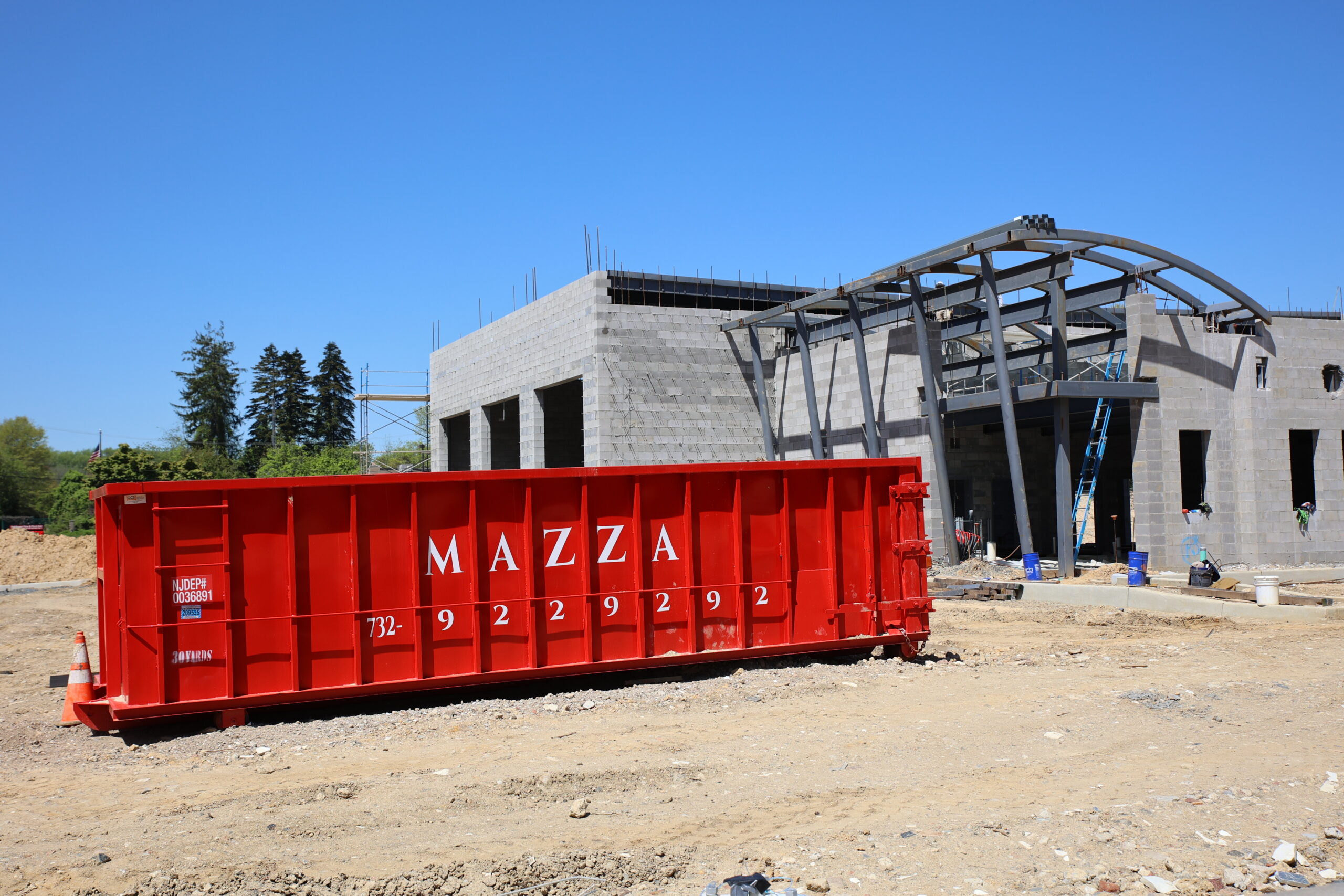
Partnering with a waste management provider that prioritizes sorting and recycling ensures your debris is handled responsibly. By selecting an eco-conscious provider like Mazza Recycling, you can confidently clear out your residential site knowing that your discarded materials will be properly sorted, diverting usable wood, metal, concrete, and cardboard away from landfills and converting them back into valuable raw manufacturing resources.
Ready to book your dumpster rental? Follow the link here: START DUMPSTER ORDER
Related Posts